

Utopian Delusions
Peter Scotchmer writes about the enduring lure of utopia and why humanity’s attempts to build perfect societies so often end in dystopia.

I will not walk with your progressive apes,
Erect and sapient. Before them gapes
The dark abyss to which their progress tends.
- J.R.R. Tolkien. (from’ Mythopoeia’)
“Progress is the realization of utopias”. --Oscar Wilde
“Utopia,” said a journalist the other day, “is buried with Karl Marx.” Would that this were the case, but sadly this is not so. Utopia is still very much alive in the minds of misinformed ‘progressive’ idealists and their victims. The word Utopia itself was coined by Sir Thomas More for his book of the same name in 1516, in which the author described an idealized make-believe society whose members shared their property and lived in apparent harmony with one another. It is the first in a series of visions of a perfect but wholly imaginary society, this one ‘discovered’ by a traveller called Raphael Hythloday centuries before. Yet ‘Utopia’ is a word derived from the Greek ou topos, meaning “no place,” and ‘Hythloday’ comes from the Latin hythlodaeus, or “dispenser of nonsense” in English. More’s intention in writing Utopia was satirical in nature. There is no perfect society simply because, as he well knew, no human being is, or has ever been, perfect. Only God is perfect. This unfortunate fact has not prevented large numbers of gullible adventurers from heeding the siren call from deluded dreamers to join them in escaping the restrictions of the imperfect societies in which they live in order to help create a perfect social order somewhere else, only to discover that utopia is all too often its opposite, a fanciful ‘dystopia.’ The firebrand Concordia University academic Dr. Gad Saad derides these dreamers as fantasists who believe in ‘Unicornia.’ Unicorns have never existed.
The names of these fabled utopias are legion. They include such idealized literary realms as Plato’s imagined Republic, King Arthur’s legendary Avalon and Camelot, the ‘sunken kingdom’ of Atlantis, the “brave new world” of Shakespeare’s The Tempest, Sir Philip Sidney’s Arcadia, and Eldorado, Spanish for ‘the golden one,’ reputed to exist somewhere in South America, imagined, but not yet ‘discovered.’ Another utopia is the Biblical Garden of Eden before Adam and Eve were expelled from it, and the Celestial City of Bunyan’s The Pilgrim’s Progress, attainable by devout believers, but only after their deaths, as perfection is not earthbound.
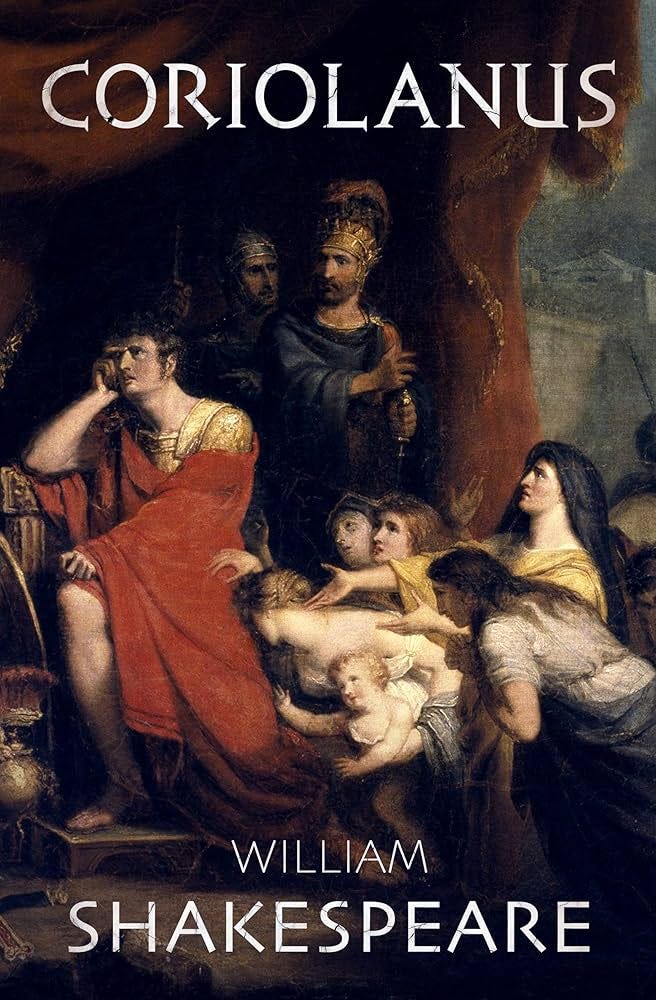
Shakespeare’s tragic play Coriolanus belongs here too, on the strength of a famous claim uttered by Gaius Marcius. He was a legendary hero of Rome who defeated the rival tribe of the Volsci by capturing their town of Corioli, allegedly in the year 493 B.C., for which he was honoured with the name ‘Coriolanus.’ Yet fame was not enough for Gaius Marcius Coriolanus, who, swollen with pride in his achievement, so annoyed the Romans he rescued that they banished him from Rome. In a fit of pique on hearing of this, Coriolanus said that he himself would “banish Rome,” and left his city with the fateful words, “There is a world elsewhere,” to seek it among his former enemies, the Volsci. He led their army against Rome, only to be killed by the Volsci, who assumed he had betrayed them when he sought peace with Rome. You cannot be a turncoat twice, and expect no consequences for your apparent duplicity.
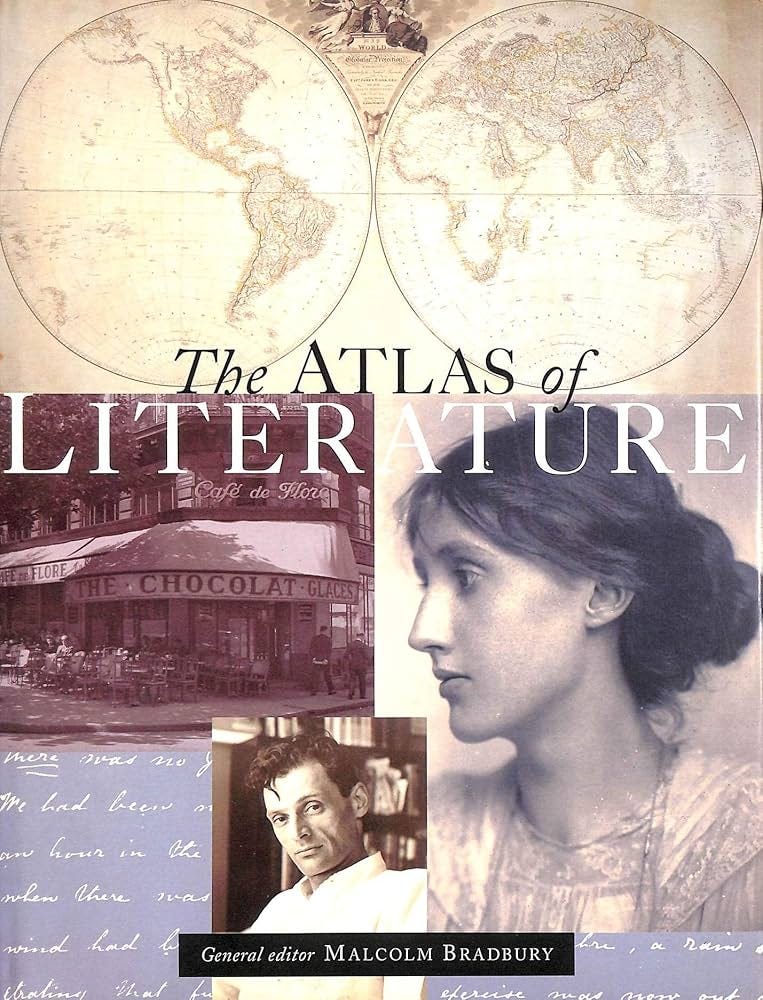
It is true that “there is a world elsewhere,” but the assumption that it must be better than one’s present circumstances is highly debatable. Many adventurers, dissatisfied with life among their own people, have similarly believed they each could find such a place elsewhere. Among them were Puritans in search of religious freedom who left England on the Mayflower in 1620 for what they hoped would be what John Winthrop of the Massachusetts Bay Colony described in a shipboard sermon as a shining “city on a hill,” basing this image on the words of the Gospel (in Matthew 5: 14-16). It is given powerful expression in the light of Lady Liberty’s flaming upheld torch in New York Harbour, glimpsed by hundreds of thousands of incoming immigrants and refugees. Among them was the English-born painter Thomas Cole who admired “the American wilderness” which for him “represented sublimity”; it was “a romantic dream,” continues a contributor to Malcolm Bradbury’s The Atlas of Literature, but “the realities were generally grimmer: the destruction of forests, the humiliation and murder of the Indian, the slaughter of the buffalo, the erosion of soil, the westward spread of slavery,” broken treaties and wholesale rapacity and, in the mind of the present occupant of the White House, a demand that Canada, blessed with limitless natural resources, should become “the fifty-first state,” presumably in accordance with America’s “manifest destiny,” a dystopian dream, for Canadians, of subjugation and dispossession. An early Governor of Massachusetts, William Bradford, admitted in his history Of Plymouth Plantation 1620-1647 to distress at having to pronounce a death sentence on a young man found guilty of bestiality in 1642, asking himself how came it that “so many wicked persons and profane people should so quickly come over into this land?” Yet the Devil disguised as a serpent was present even in the Garden of Eden. Fantasists beware.
What kind of an Ironist are You?
One victim of the romantic dream of “elsewhere” was the English poet Samuel Taylor Coleridge, who in 1794, together with his friend Robert Southey, also a poet, planned to set up an egalitarian society governed by the tenets of “Pantisocracy,” a philosophy of ‘government by all,’ with property to be held in common, to be established in Pennsylvania, on the banks of the Susquehanna River, but they abandoned it long before any spades ever broke virgin soil. The well-meaning philanthropist Robert Owen set up a similar experiment in socialist utopian living in a working community in 1825 in New Harmony, Indiana. Yet the venture had failed by 1827, as the result of “serial disagreements” among its members. Owen was a well-meaning man of conscience and principle who wished to improve working conditions for his employees. The worst of utopians lack such tender mercies. They are self-righteous ideologues, believers in ‘might is right,’ contemptuous of traditional virtues, immune to self-knowledge, willing to deceive and exploit the weak and uneducated, demonize those who oppose them, and privilege their supporters. They are obsessed with taking control and misusing power, blissfully unaware of power’s own tendency to corrupt its users and create dystopias for their subject peoples.
Elisabeth Nietzsche (1846-1935) was one of these. She was the sister of the German philosopher Friedrich (1844-1900), a troubled man who promoted his belief in ‘the death of God,’ and had to be placed in a lunatic asylum at the end of his life. His sister was his hagiographer, a woman whose mendacity and self-deception knew no bounds. A rabid antisemite herself, frustrated with the slow progress towards the ‘Aryan’ Germany she pined for, she left it in 1886 for Paraguay with her husband, accompanied by a number of German peasants, a “select group” of blond-haired, blue-eyed “Aryans” intent on establishing ‘Nueva Germania’ (‘New Germany’) in a rural area of this nation later said to have sheltered the Nazi doctor Josef Mengele at the end of the war. This settlement failed. It could not sustain itself, and all but vanished shortly after Elisabeth abandoned it in 1893 on account of her need to minister to her brother, then in precarious health in Germany. So much for Utopia.
After Friedrich’s death, according to the writer Ben Macintyre in his study Forgotten Fatherland, his sister deliberately misrepresented her brother’s character, ascribing her own antisemitism to him. The phrase “will to power,” descriptive of Friedrich and Hitler himself, was not Friedrich’s, but Elisabeth’s. She it was who “invested” her brother “with her own proto-Nazi views” and “invented and organized the semi-mythical cult of his philosophy.” Her “enthusiasm for Hitler was little short of hysterical”; for her, he was “wonderful” and “magnificent.” These words are “not the extravagant ravings of senility,” says Macintyre, “they are the effusions of a believer.” She described her idol thus: “What I like most about Hitler is his simplicity and naturalness…he wants nothing for himself but thinks only of Germany. I admire him utterly.” A teary-eyed Hitler gave her a full Nazi funeral in 1935. Years later, Macintyre visited what is left of Nueva Germania: a few decrepit huts and a hint of “inbreeding” and “degeneration” among those few descendants of German ancestry he was able to locate there.

Hitler, Stalin, and Mao were dysfunctional creators of dystopias, each the exponent of twisted ideas who imposed a rule of authoritarian terror on their own people before attempting to export it to the rest of the world. Hitler’s belief in ‘Aryan’ racial superiority, swallowed whole by complicit Germans, plunged the world into the murderous Second World War, his Third Reich remembered only for its extermination camps. Hitler had promised “re-settlement” for his “displaced” Jewish compatriots and more “lebensraum”(living space) in productive eastern European farmlands for acquisitive Germans, while Stalin promised a “fairer” society shorn of capitalists, priests, and kulaks (rich peasants), abolishing banks, murdering the Russian royal family, destroying places of worship, confiscating private property, demonizing marriage, and waging war against “class enemies” in Ukraine during the state-licensed starvation called the “Holodomor”. Mao tse-Tung behaved similarly. During the massacres of Chinese people in the Cultural Revolution of 1966, Mao proscribed the ‘Four Olds’: “old ideas, old culture, old customs, and old habits,” were all to be swept away into the dustbin of history by cadres of unthinking brainwashed youths brandishing Mao’s unreadable red book. This trio of mendacious thugs sought power for themselves and their sycophants, using lies and exaggeration to tempt the unwary, and execution or the gulag for those who resisted their rule.
In 1978, the charismatic American evangelist Jim Jones of Jonestown, in the tropical jungle of Guyana, far from officialdom’s prying eyes, was the uncrowned king of grateful suppliant followers until, fearing exposure of his own mistreatment of his deluded flock from an imminent Congressional inspection tour, persuaded them all to drink a cyanide-laced beverage that killed 900 of them, including many children. Naïvely trusting people, uncritical conformists to surrendered but illegitimate authority, were led like lambs to the slaughter. To update a saying misattributed to Edmund Burke, all that is needed for savagery to re-assert itself is for victims to be beguiled by lies and false promises. We all must remain vigilant. If it seems too good to be true, beware: it probably is. Eternal vigilance is the price of liberty.
Peter A. Scotchmer, Ottawa, Feb. 18-22, 2026
 | A guest post by
|